Read the full transcript
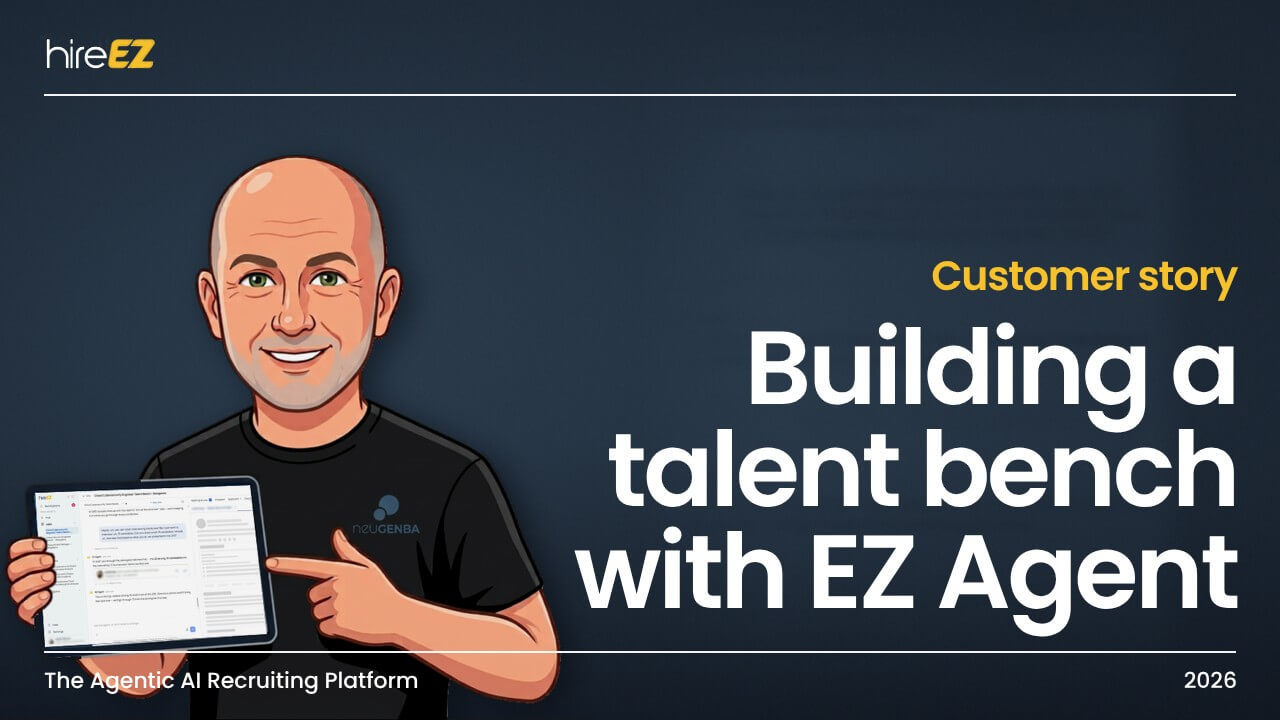
Martin Warren: Hi everyone. I wanted to talk you through another scenario with EZ Agent, a follow-on to what I did recently.
I've just come out of a meeting with the CTO and the chief security officer. We were going to move cloud security roles from Bangalore to Jakarta, but there was a high risk in doing that because of the supply and the quality meeting the bar, and it was going to take us a long time to fill. So the decision was to move some roles to Indonesia but leave the bulk of the roles in Bengaluru.
We need a constant pool of candidates who can fill roles when people leave. That means having a talent bench, and having, at any one time, 10 to 15% of that bench interested in our organization, really interested in the role, and pretty much available to start if a role comes up.
I've asked EZ Agent to build me a go-to-market plan on what I just talked about. You can see all the instructions I've fed into the agent; I basically talked to it. The other really important thing is that when we talk to candidates, we want to give them context and explain exactly what this is. This is a talent bench. It's not active roles. They're not live, available headcount right now. Giving that context is going to be really important, and so is how we convey it in the outreach.
I've asked EZ Agent to take all of this into account, even use the insights we did previously, and build me a go-to-market plan. If there are gaps in what I've shared, it needs to ask me questions, fill in those gaps and raise any concerns. So let's kick it off and see what EZ Agent does.
Straight away, it's determined that it needs to build a go-to-market plan. It knows this is all about cloud security engineer roles in Bengaluru, and it knows that when I did the insights previously, I asked it to make a recommendation. You can see it's starting to build up the project and all the requirements. Here we have the ICP, and it's identifying the previous insights I did back on September 6. If you were a human doing this, this is hours, days of potential work you'd need to undertake and work through.
Okay, here we go. It's built our dashboard, our working environment. It's created the sourcing tab, our outreach, our prospects, the people we'll connect with, and our QIA-ready bench.
I asked it: give me a shortlist of five to seven candidates we can calibrate against, because I really want to understand the capability and the quality of experience of the candidates we're considering. It's going to come up with a list of prospects that meet that ICP.
It's asking me what experience and seniority the bench should be based on. I'm going to say mid-level, three to five years of experience. It's given me options: mixed across the bench, multiple bands, or I can give it something else. Let's just say mid-level. Now it's asking me about platforms. I'm going to say multi-cloud; we need two or more. Now it's asking me about cloud security architecture. I actually asked it to prompt me to help build this, so I'm going to say cloud IAM and DevOps. Let's leave it at that. They must already be based in Bangalore. Let's skip this one and talk about the insights. Very, very smart.
It's interacting with the ICP agent now, as you can see, and we have the opportunity to work with the agent on making the ICP a little more flexible. One thing I will add to the ICP is that they need to have worked on large-scale systems.
Now it's building out a calibration, testing the cloud security pool for Bangalore and looking at what we need to focus on. Here's the go-to-market plan: 100 to 200 cloud security engineers based in Bangalore, mid-level, multi-cloud. We'll go through a calibration round first, and it's telling me the process. Our QIA target is 10 to 15% of the bench. QIA means they've been screened, met the recruiter, passed the technical interview and are ready to convert. There's an engagement outreach draft for once the calibration bar clears, and a nurture cadence that keeps a warm bench cycling into QIA as people convert or go cold. The calibration round will surface results shortly, with the split and next steps.
Let's let it go off and run some fresh insights as well. It's asking me to define what "interested" and "available" mean for QIA status, so the calibration run can test against the completion bar. Let's talk to it rather than typing.
Interested means we've reached out to the candidate, they've responded to our outreach, and we've explained the opportunity and the impact they can have, in context: this is a talent bench, we don't have live roles at the moment, but roles will come up from time to time. After going through that process and understanding their capability, they flag that they're interested if such a role comes up.
Available means we've fully qualified them. They've had an interview with the recruiter, gone through technical interviews with the hiring team and passed, and they may or may not have met a hiring manager. They've built a relationship with the team, they understand the team and the culture, and they've said they're really interested in such a role if it comes up. That's what available means.
You can see it's looking at the definitions, so it understands them. Now it's asking whether I want to start reviewing candidates. I'm going to ask: can I start interviewing one by one? I only want to interview 15 candidates. Which 15 should I interview first, based on what you've presented from the 200?
It's complete, so I'll push it across to my working storage and come back to it shortly. This is a summary of the pool. Given the calibration, the split is 22 strong and 178 needing full review, out of the 200. That lines up with the reports that the pool is thin against the bar, which is worth keeping in mind as I go through these candidates. Getting to that 10 to 15% is going to be a hard ask, so we probably need to relax the ICP, but let's see.
What it's asking me to do now is start going through the 22 strong-fit candidates, the natural top fits to interview. Here's the first one. Let's start viewing the profiles. Looking at the background, it's telling me this is a strong fit on all these areas, but for cloud security architecture and DevOps, the profile shows some of it, not in detail. So it's suggesting the candidate is close but needs further review. I'm going to say good fit. If I click here, you can see the prospect; it's moved the one I said was a good fit to outreach. Now I've got the next one. I review it, look at the details again, and I'm going to say good fit as well.
What I'd like to do now is start building out the email campaigns. This is not for a job; it's for a talent bench, so how we frame the message is going to be really important. And let me know, once we've done that, what the next steps are.
You can see it's drafting the talent pitch outreach. It's going to look at each of the five candidates so far and write a very personalized message, pulling information out of their profile that aligns with the role requirements. So it's not going to be a generic message. Let's have a look at what it's done. I'd like it to put the name in the subject. Here it's pulled out the candidate's background, and I do recall seeing that on the profile, so the candidate can see why we're messaging them. It's put this link in, so they can respond if they're interested.
Let's look at message two: "Following up on my note about the talent bench. There's no live requisition today. The goal is to build a relationship for future roles." It's by no means salesy. It's being very transparent and very open about what we're trying to do. I'm curious to see what it does next, because I actually think it's quite good.
What would you recommend we do now? Is there anything else you think we need to do before we kick off the campaigns?
Based on the ICP, we've got 22 strong fits; of the candidates decided so far, seven have advanced and three were rejected. It recommends planning the nurture cadence, not just the first touch: the first four steps get someone to reply, but they don't keep 100 to 200 people warm. So I'm asking it: can you help me understand what you mean by planning the nurture cadence, not just the first touch? What would you advise? I'll fire that off to the agent and see what it does.
This is like one of the smartest people on your team. You can have conversations with it; you can ask it to guide you.
Here's the gap it's pointing out: the current four-email sequence, spaced three days apart, is built to get an initial answer, and frequent touches with nothing behind them burn goodwill fast. So, can you build the long nurture campaigns, and give us some advice on what we should put in them? One practical constraint first: right now, only one mailbox is connected.
I think finding is becoming a lot easier. It's the engagement piece, getting candidates to want to have a conversation with you. I think that's the power of what you're seeing here, and we can really build on it. Hopefully this gives you an idea of how the agent can build something from quite detailed instructions. Like I said, it's not a tool. You can't treat it like a tool. You've got to treat it like someone very, very smart and very capable, who can give you a whole lot of other ideas. It puts very powerful tools at our fingertips. Enjoy.
Cloud security engineers who meet a high bar are scarce, and the roles take a long time to fill. After planning with engineering and security leadership, Martin's team kept most of its cloud security hiring in Bengaluru. To fill roles quickly when people leave, it needed candidates ready before the vacancies opened.
The answer was a talent bench: a standing pool of qualified engineers who know the company and want to join when a role comes up. Martin's target was 100 to 200 people, with 10 to 15% of them ready to start at any time.
That created a messaging problem. As Martin put it, "This is a talent bench. It's not active roles." Candidates needed to hear up front that there was no open position today, only a relationship and roles that would come.
Martin didn't fill in forms or click through screens. He talked to EZ Agent, gave it the context from the planning session, and asked for one thing: a go-to-market plan for the bench.
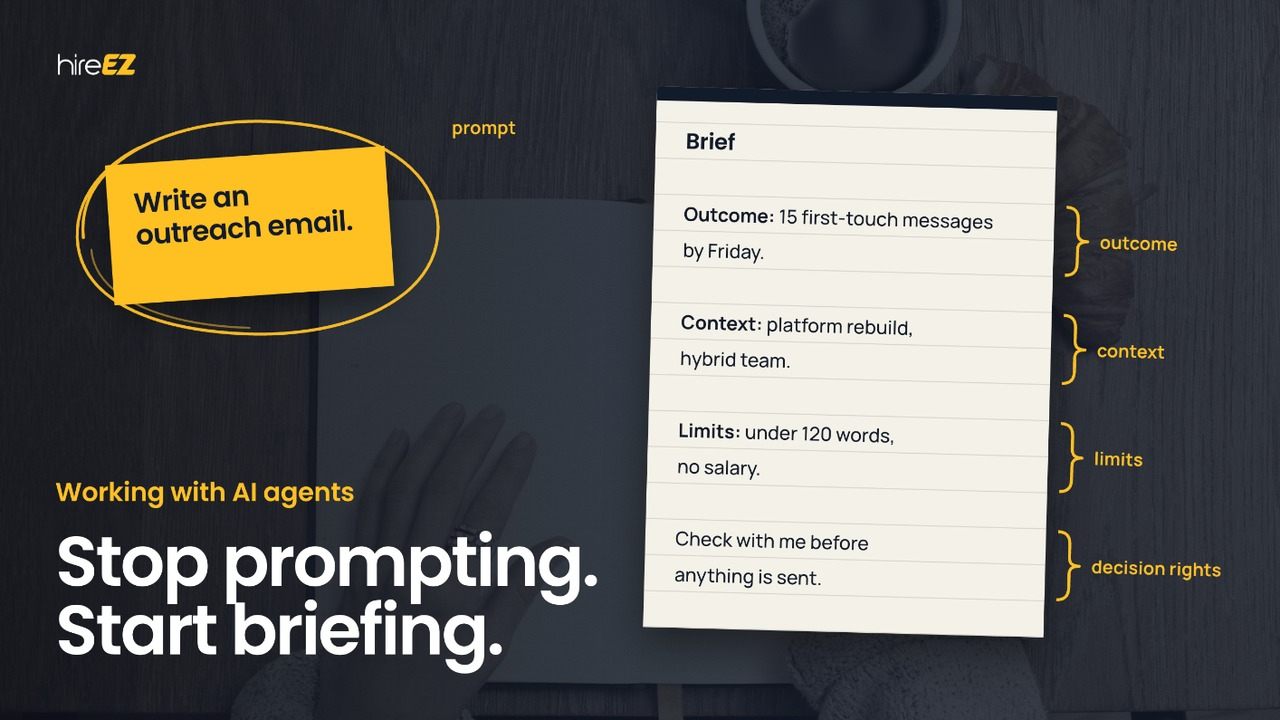
That last instruction is the difference between briefing an agent and operating a tool. Martin set the outcome and the constraints, and asked EZ Agent to come back to him wherever it needed his judgment.
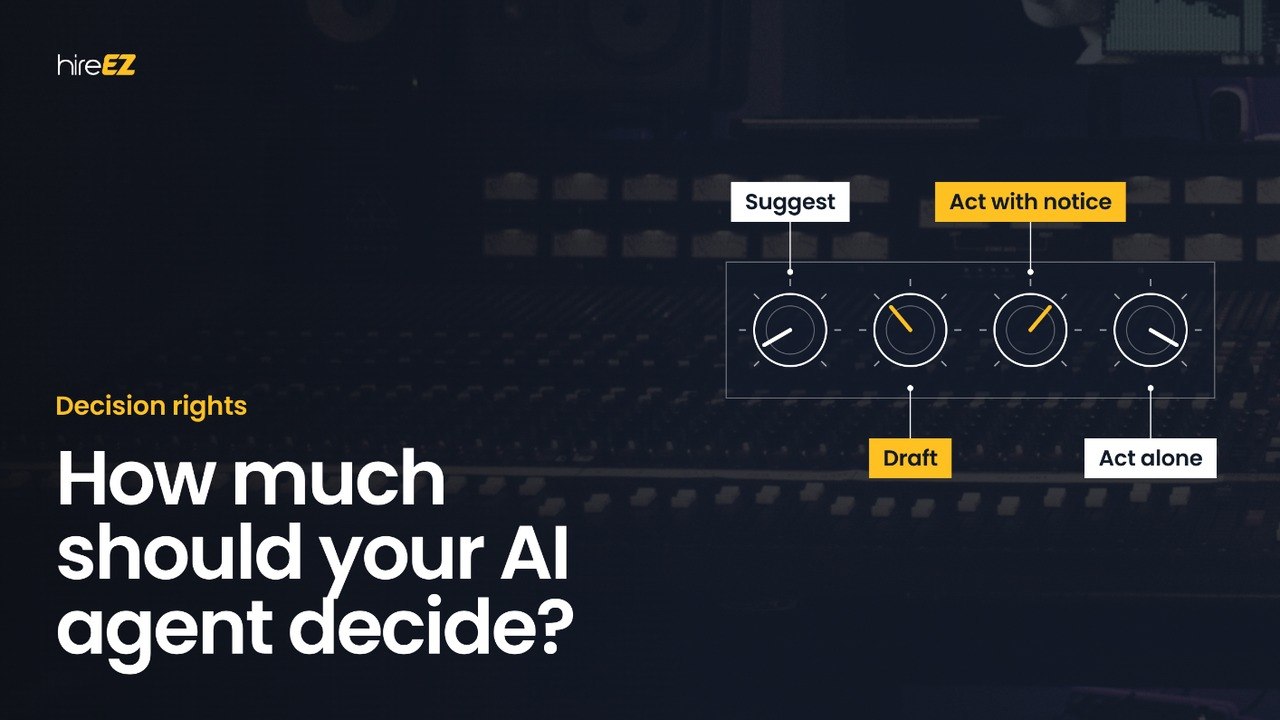
The pattern held across the session. EZ Agent worked each step and came back with options and questions; Martin set the direction and made every decision.
As Martin put it, finding candidates "is becoming a lot easier." The harder part now is engagement: getting candidates to want a conversation with you.
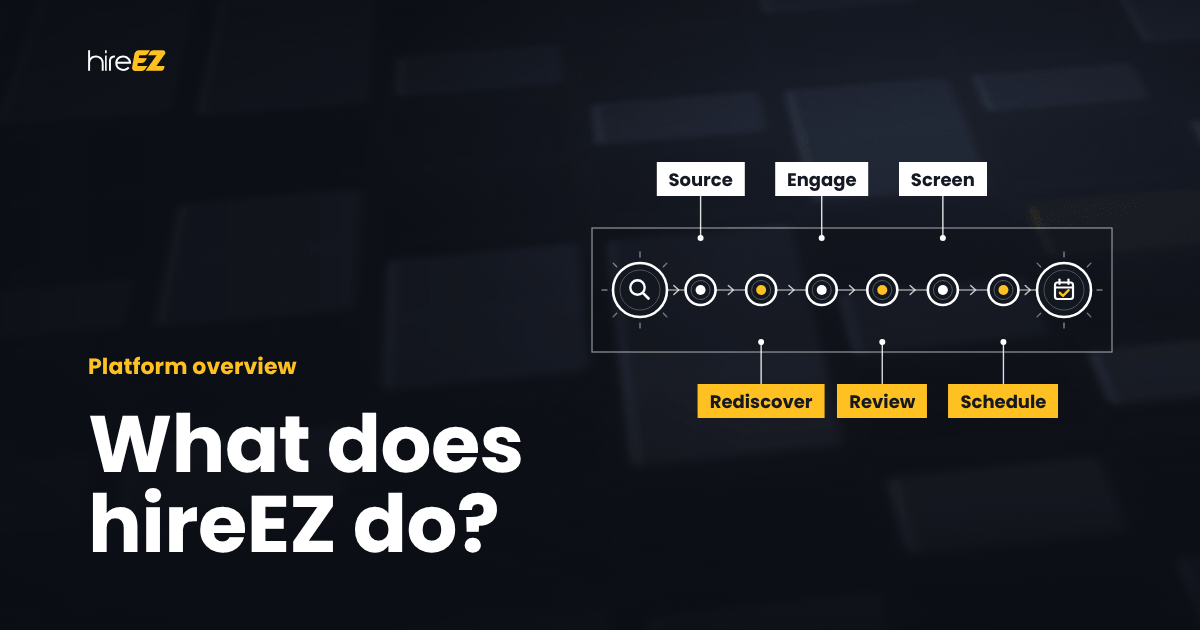
Martin's session is a working example of what agent-native means. He didn't move from page to page. He briefed EZ Agent in plain language, and it worked from his job context: his definitions, the earlier insights and his edits to the profile.
It came back with options and questions, and every decision stayed with Martin. EZ Agent doesn't make decisions on your behalf without your approval.