Story highlights
-
The shift
From agents to assistants
Within five years, Gerry expects every stakeholder in hiring to have an AI assistant that knows their tools and the outcomes they need.
Watch at 0:12 -
The opportunity
An assistant for candidates
The biggest impact may come from AI that works for candidates, with transparency, feedback and a fair shot at every role.
Watch at 1:31 -
The advice
There is no choice
Recruiters who resist AI are like people who refused the telephone. The tools are already changing how we work.
Watch at 8:44
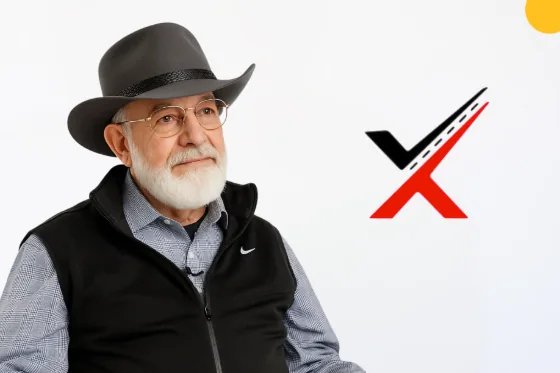
Gerry Crispin on how agentic AI could transform the candidate experience
In this review of EZ Agent, Gerry Crispin looks five years ahead. He predicts that every stakeholder in hiring will have an AI assistant, and that the one built for candidates could matter most.
An assistant for every stakeholder
Gerry would swap the word agent for assistant, and he expects everyone in hiring to have one:
“Every one of the stakeholders in our space will have an assistant, somebody whispering in your ear, not human, obviously, but helping with the job and the role that you happen to have.”
For recruiters, that assistant will know every tool they use, which ones are integrated and which aren’t, and the outcomes they’re working toward. For hiring managers, it can help with what they don’t do well today: interviewing and selecting without bias. To see what that looks like in hireEZ, read hireEZ and EZ Agent: A complete introduction.
From working the tools to tools that work for us
Asked what makes agentic AI different, Gerry puts it in one line:
“We really had to work the tools, and now the tools are working us.”
Agentic AI can infer what you’ll need to do next and take on the transactional steps that used to leave recruiters stuck:
“Well, agentic AI is telling you what you need to do next.”
For more on the difference, see Agentic AI vs. generative AI: What recruiters need to know.
The candidate’s assistant: the one no one is building yet
“But the assistant that I think will be the coolest, that no one knows the impact of, will be the assistant that the candidate will have, and no one right now is providing that.”
Candidates are already using AI to prepare for interviews and tailor resumes, and some employers call it cheating. Gerry thinks that’s the wrong conclusion. In his view, the candidate really just wants a job that’s meaningful.
Fairness means everyone gets up to bat
What candidates need most, Gerry argues, is transparency: a clear yes or no, and useful feedback when it’s a no. Underneath all of it is fairness:
“When you really look at what a candidate wants, they want to know that they got a shot at it. They want to know that they got up to bat.”
That only happens if AI working for the employer engages every candidate at the top of the funnel, including by voice. In his example, an assistant offers every interested applicant an interview within 72 hours. It shares the decision with human colleagues, then offers feedback to anyone who doesn’t move forward.
“So candidate experience can be enormously impacted, to the good, in the future, if we think differently about how AI could be applied.”
 Gerry CrispinReviewing EZ Agent
Watch at 8:32
Our guide on how to improve candidate experience covers what teams can do today.
His advice to recruiters who resist
“The advice I give them is to get over it. There is no choice.”
Gerry compares it to someone in 1910 insisting they don’t need a telephone because the mail works fine. The tools are changing how we communicate and how we use data to make better decisions faster. Watch his full review above, or see what EZ Agent can do.
Key moments
- 0:12Every stakeholder gets an AI assistant
- 1:09An assistant for hiring managers
- 1:31The candidate’s assistant
- 2:35From agentic AI to real-time assistants
- 3:10Tools that work for us
- 3:59Transparency and feedback for candidates
- 5:02AI that screens every candidate
- 7:25Fairness as the measure of candidate experience
- 8:44His advice: there is no choice
Transcript
Gerry Crispin. From the video’s captions, edited for readability.
You know, over the next five years, this whole idea of agents, I would pivot the term to assistant. Every one of the stakeholders in our space will have an assistant, somebody whispering in your ear, not human, obviously, but helping with the job and the role that you happen to have. And you can easily see that with recruiters, because obviously there’s a lot of tools that recruiters use. And now that will be part of how that agent thinks, and it won’t be just one tool. That agent will know, for the recruiter, all of the technology tools that they’re using, and which are integrated and which aren’t, and which need to be dealt with in various ways. But they’ll also know what the outcomes are that the recruiters need to deal with. So that’ll be interesting.
There’ll be an assistant for a hiring manager, and that will be fascinating as well, because it’ll help the hiring manager actually do what they don’t do very well right now, which is interview, select, etc., without bias. And so an assistant could be helpful in terms of mitigating some of that.
But the assistant that I think will be the coolest, that no one knows the impact of, will be the assistant that the candidate will have, and no one right now is providing that. No one. But you see pieces of it, because you get angry employers who think that the candidate’s cheating because they’re getting help in their interview in real time, or they’re getting help in rethinking their resume in relation to the job spec, the specific job that they’re applying for. And I think we’re concluding the wrong thing. The candidate really just wants to get a job that’s meaningful and helpful, etc. And the tools right now are pretty raw, but they’re working with what they can, and they’re learning. And actually, they’re learning faster than some employers, which is what pisses off the employer.
So I think what we’re going to see is a shift from whatever this term is, agentic AI kind of thing, to this idea of assistants that’ll literally operate in real time to help you to perceive what’s going on, to help you set priorities, to guide you to the tools and/or the decisions that, you know, you need to make. But they’re there, and they’re letting you focus more effectively.
Well, the short answer to that is we really had to work the tools, and now the tools are working us. And that’s really the difference. Agentic AI has enough of an algorithm that it can infer and sense what it is we’re going to be needing to do, and fundamentally is kind of leaping ahead of us, or helping us to leap ahead of our thinking around that. So it eliminates a lot of the transactional things, or things that we would be sitting there going, like, what do I do next? Well, agentic AI is telling you what you need to do next.
Well, one was what I just talked about in terms of an assistant for the candidate, but what we really need is full transparency. The candidate, really, when we think about their experience being positive or negative, it has to do with some basic kinds of things, you know. Are you telling me whether I can go forward or not? Are you telling me that, you know, thank you very much, but we’re not going forward with you, and here’s some of the things that we think would be helpful to you in terms of your continued look for a job? Feedback, you know, those kinds of things are going to be important. But all of them impact a concept of fairness. When you really look at what a candidate wants, they want to know that they got a shot at it. They want to know that they got up to bat.
The only way they’re going to get up to bat is if the assistants that are working for the employer are taking the top of the funnel and engaging all candidates in the collection of data, as well as the probing, if you will, the screening, the initial screening. And for that to happen, it means that AI is going to have to move to voice, not just text, a combination of the two. It’s going to have to have its own voice. It’s going to have to be able to say to the candidate, ‘Oh, I see that you’re looking at this job. If you express interest in this job, I’ll interview you in the next 72 hours at your convenience. So you need to do some due diligence, because you’re going to be competing with, well, right now, 132 different people, and I’m going to interview all of them. And I’m probably going to stop leaving this job open on our website when we hit 150, because we know at 150 that we have a 100% probability of being able to find and hire a qualified candidate. But to find out if you’re a qualified candidate, I want you to be able to get up to bat just like everyone else.
So I will interview you, even though I’m not human. And then I’m going to take the data that I get, and I’m going to talk with my human peers and colleagues, and we’ll decide who we go forward with. And then I’ll come back to you, and if you want, but only if you want, I’ll sit with you and spend a little time telling you why you did not go forward, if you don’t, and suggest ways that you might compete more effectively in the future for this job, or maybe other jobs, maybe not even jobs that we have, but maybe suggest other things. But that’s up to you. You’re going to have some choices around that. So how do you feel about that? If you feel comfortable enough, do a little bit more due diligence, and then all you have to do is say, “I’d be interested in this job.”’
Now, how’s that going to make you feel as a candidate that doesn’t go forward, because 99% of them aren’t? It’s a lot better than being ignored. It’s a lot better than, you know, sitting around waiting for somebody to get back, and they never do, you know, in general. So we have to shift how we think about what we want as an outcome on all of the candidates whose lives we touch. And if I can feel confident that 100% of all the candidates, even if I disappoint them, believe that they’ve been fairly treated, that they got up to bat just like everyone else, they were asked the same questions as everyone else, you know, and the eyes didn’t roll simply because of how you looked, or, you know, how you responded from a voice tone, etc., but focused in on whether or not you are capable to do the job. So candidate experience can be enormously impacted, to the good, in the future, if we think differently about how AI could be applied.
The advice I give them is to get over it. There is no choice. I don’t even know how to help them, other than to be very clear to them that this is the future. It would be like telephones in 1910 or something, and someone going, ‘Oh no, I don’t need a telephone. I’ve got the US mail. You know, I write letters to people and I put them in envelopes and I lick stamps and I put them in the post, and in days I have an answer. You know, so why… I don’t understand this telephone thing. Why would I be using a telephone?’ And, you know, you could sit there and you could explain that over and over and over again. But, you know, the basic thing is get over yourself and start dealing with the tools that fundamentally are shifting the way we communicate, shifting the way we understand the world around us, increasing our ability to have access to data, and organizing that data in ways that help me make better decisions faster. And without that, you know, you don’t have a job anywhere.